Why the Chimney Is the Most Overlooked Item on a Home Inspection Checklist
When families buy or sell homes in Matthews, Mint Hill, Indian Trail, or the surrounding Charlotte metro suburbs, the home inspection checklist is thorough — roof, HVAC, plumbing, electrical, foundation. But the chimney often receives only a cursory glance from a general home inspector, who typically does not have the specialized tools or training to evaluate the flue interior, smoke chamber, or liner condition. A fireplace that looks perfectly fine from the living room can be concealing cracked flue tiles, deteriorated mortar, a failed liner, or an improperly installed past repair — issues that pose real safety and financial risk for the incoming buyer.
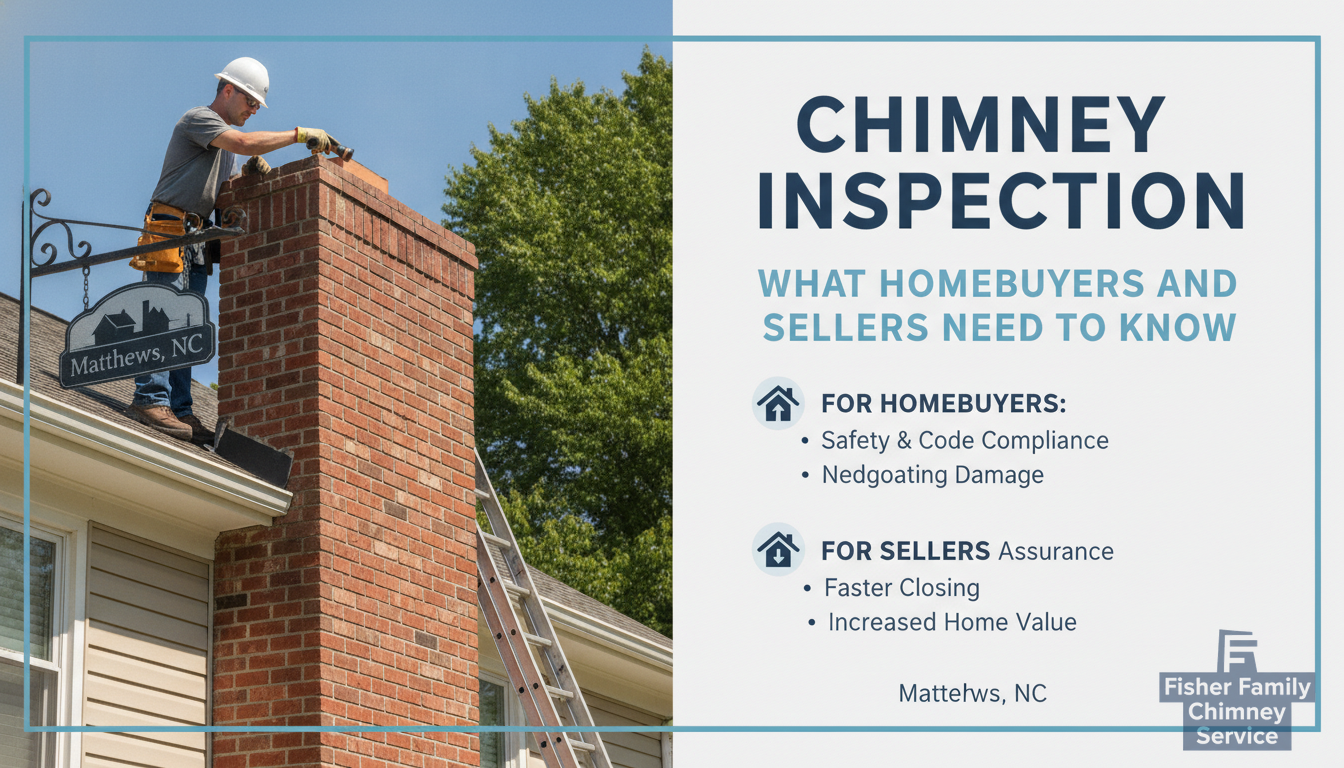
That is why a dedicated chimney inspection by a qualified specialist is so important during any real estate transaction. Fisher Family Chimney Service performs NFPA 211 Level 1, Level 2, and Level 3 inspections throughout Matthews and the greater Charlotte area, providing buyers and sellers with honest, photo-documented findings they can rely on at the negotiating table and beyond.
Understanding the Three Levels of Chimney Inspection
Not all chimney inspections are the same. The NFPA 211 standard defines three levels of inspection, each appropriate for different circumstances:
- Level 1 Inspection: Covers all readily accessible portions of the chimney exterior and interior — the firebox, damper, smoke chamber, and visible flue. It checks for proper clearances, structural soundness, and freedom from deposits or obstructions. A Level 1 is appropriate for a routinely maintained chimney with no changes in use or fuel type.
- Level 2 Inspection: Required during any real estate transaction, after a chimney fire, or when the appliance type or fuel has changed. It includes everything in a Level 1 plus examination of accessible attic, basement, and crawl space areas adjacent to the chimney, and typically includes a video scan of the flue interior. This is the inspection that reveals hidden liner cracks, gaps, or missing sections that no visual inspection from the firebox can detect.
- Level 3 Inspection: Reserved for situations where a serious concealed hazard is suspected. It may involve removal of certain chimney components such as the chimney crown or sections of interior wall to gain access. Level 3 inspections are relatively rare and are typically recommended only when a Level 2 finding warrants deeper investigation.
What a Level 2 Inspection Uncovers That General Inspectors Miss
The most valuable tool in a Level 2 chimney inspection is the flue camera — a flexible video inspection system that travels the entire length of the liner and captures high-resolution footage of the interior flue walls. What this camera routinely finds includes:
- Cracked or displaced terra cotta flue tiles that allow combustion gases to leak into surrounding framing
- Gaps between liner sections where the original installation was not properly supported
- Mortar joint deterioration inside the smoke chamber that accelerates water infiltration
- Animal nesting material lodged in the flue that creates a fire hazard and airflow restriction
- Evidence of a previous chimney fire — glassy, distorted tiles or areas of localized severe creosote — that the sellers may not have reported or even been aware of
- Improper chimney liner sizing for the currently connected appliance, a common issue when a furnace or water heater was upgraded without relining the shared flue
Each of these findings is documented with photos and presented to you in a clear report. If a liner issue is discovered, our team can walk you through the available repair options, from targeted tile repair to a full stainless steel liner installation that brings the system into full code compliance.
For Sellers: Why Getting an Inspection Before Listing Pays Off
Sellers in Matthews and surrounding communities like Weddington and Stallings who invest in a pre-listing chimney inspection gain a meaningful advantage. Here is why:
- You know exactly what condition the chimney is in before buyers and their inspectors do, eliminating unwanted surprises during the due diligence period.
- If repairs are needed — such as tuckpointing and mortar repair or a new chimney cap and crown — you can complete them on your timeline and at your chosen contractor's price rather than being pressured into a rushed repair credit at closing.
- A documented clean inspection report is a marketing asset. It signals to buyers that the home has been well maintained and that the fireplace is ready to use.
For Buyers: Do Not Waive the Chimney Inspection
In competitive real estate markets, buyers sometimes feel pressure to waive inspections to strengthen their offer. While that may be a calculated decision for some components of a home, the chimney is one area where the cost of discovery after closing can far exceed the cost of the inspection before it. A full liner replacement, for example, can be a significant expense — an investment that is far easier to negotiate as a seller concession when it is discovered before you sign. The inspection itself is a modest, worthwhile expenditure that protects your family's safety from day one.
Fisher Family Chimney Service serves homebuyers throughout the Charlotte metro region including Mint Hill, Indian Trail, SouthPark, and
Call +19809801722 or fill out our online form for a free, no-obligation quote.Discuss This With Our Team